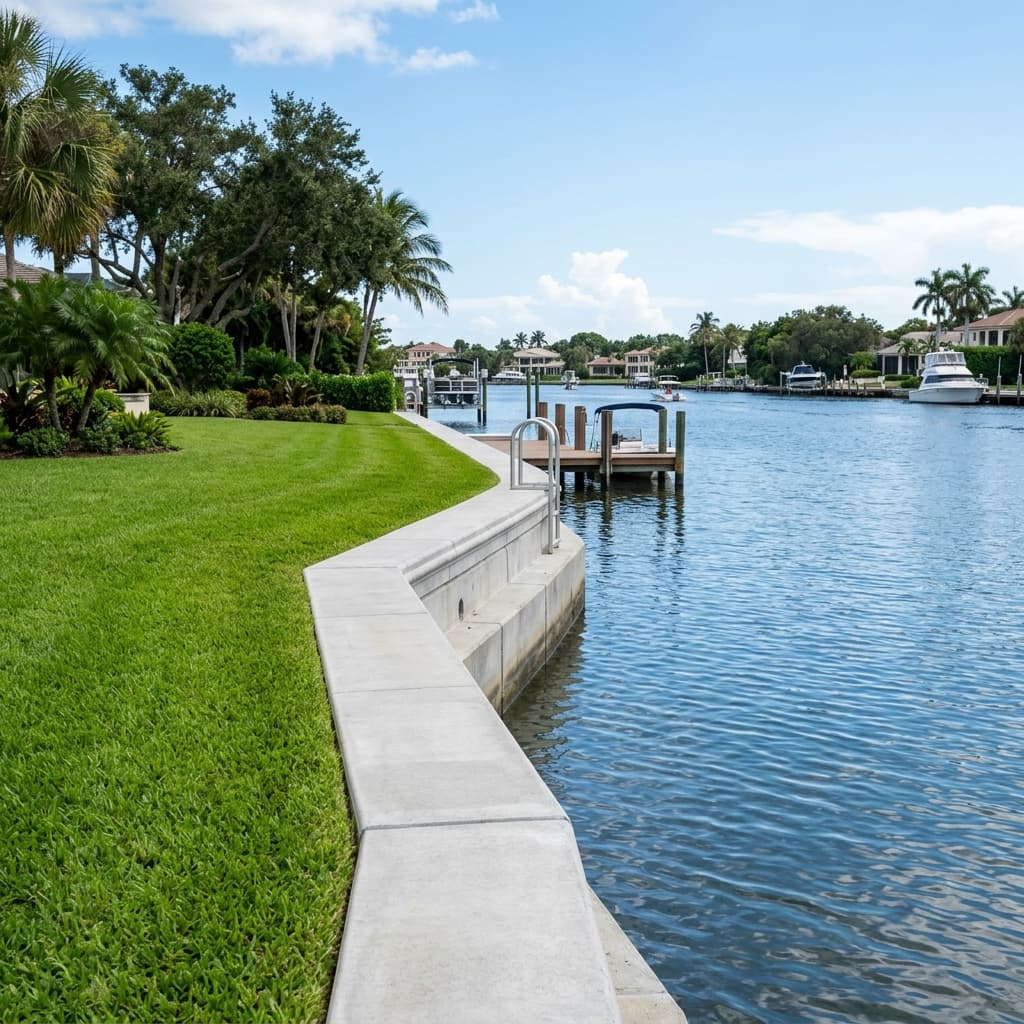
A seawall rarely fails all at once. It usually gives warning signs first: cracks in the cap, soil sinking behind the wall, gaps between panels, or a wall that leans toward the water. If you spot any of these, schedule an inspection with a licensed marine contractor. Catching problems early can mean a targeted repair instead of a full replacement.
Here are seven signs to watch for and what each one may mean.
1. Sinkholes or depressions behind the wall
Soil settling or holes forming in your yard near the seawall are among the most important warnings. They often mean soil is washing out through a gap in the wall, a process called soil loss or erosion behind the wall. As soil escapes, the wall loses the support it needs and the yard above can collapse.
What to do: keep people and equipment away from the area, and call a contractor promptly. Don't simply fill the hole with soil, since that doesn't fix the leak.
2. Cracks in the cap or panels
Hairline cracks may be cosmetic, but wider cracks, cracks that grow over time, or cracks with rust stains around them deserve attention. Rust staining can mean that reinforcing steel inside concrete is corroding and expanding, which breaks the concrete apart from the inside.
Track changes over time
Take dated photos of cracks with a coin or tape measure for scale. If a crack grows between photos, share that history with your contractor.
3. Gaps between panels or at joints
Seawalls are built from sections. When joints open up, water and soil can pass through. You may notice gaps from the water side at low tide, or see soil stains on the face of the wall.
4. Leaning or bowing
A wall that tilts toward the water or bulges in the middle is under stress. Common causes include soil pressure, failed anchors or tiebacks, or erosion at the base of the wall. Leaning is a structural concern and should be evaluated soon.
5. Erosion at the base (toe) of the wall
Look at the bottom of the wall at low water. If the seabed in front of the wall has scoured away, the wall can lose support at its base. Some properties use rock or riprap at the toe to reduce scour, but that protection can shift over time.
6. Water seeping through the wall
After a high tide or heavy rain, look for water trickling through cracks or weep holes in unexpected places, or for wet spots on the face of the wall well above the waterline. Unusual seepage can be a sign that the wall's drainage or filter fabric isn't working as intended.
7. Damaged or missing cap, hardware, or anchors
The cap ties the top of the wall together. A cracked or separated cap, or visibly corroded tiebacks and hardware, can weaken the whole system.
How often should you inspect your seawall?
A quick visual check after major storms, very high tides, or seasonal changes is a good habit. Many owners also schedule periodic professional inspections, especially for older walls. Your contractor can recommend a schedule based on your wall's age, material, and exposure.
A simple self-check routine
- Walk the yard behind the wall and look for soft spots, depressions, or sinkholes.
- Look along the cap for cracks, separation, or rust staining.
- At low water, view the face of the wall for gaps, bulges, and seepage.
- Check the base for scour or shifted rock.
- Photograph anything new and compare it to past photos.
Repair vs. replacement
Depending on what an inspection finds, options may include sealing joints, injecting voids, repairing the cap, adding anchors, installing a new wall in front of the old one, or full replacement. The right choice depends on the wall's condition, its age, local requirements, and your budget. Get a written assessment and, for larger jobs, consider a second opinion.
Permit requirements vary by location and may differ for repairs and replacements, so ask your contractor what applies to your property.
The bottom line
Sinkholes, widening cracks, open joints, leaning, and erosion at the base are your seawall's way of asking for attention. Regular checks and early repairs protect your property and can help avoid a much larger project down the road.
Find a seawall contractor near you and schedule an inspection.