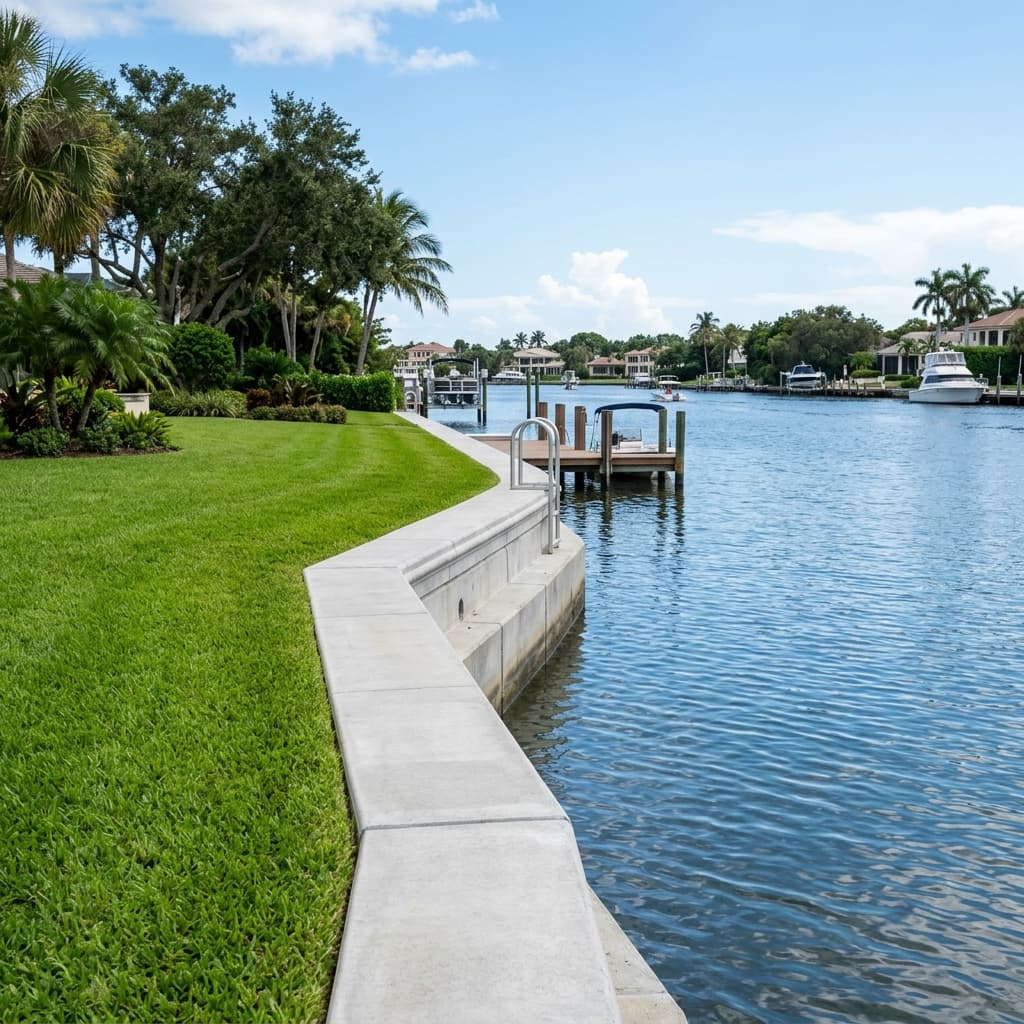
If you own waterfront property in Florida and plan to repair, raise, or replace a seawall, the most important thing to know is this: requirements can come from your city or county, from state agencies, and sometimes from federal agencies, and they change over time. Before you sign a contract, confirm which rules apply to your specific property and project. A reputable marine contractor will help you do that.
This guide explains what to check, who to ask, and how to avoid the most common permitting mistakes. It does not replace advice from your local building department or a licensed professional.
Why seawall rules keep changing
Florida's coastline faces ongoing pressure from storms, erosion, and rising water. In response, many local governments have been reviewing how seawalls are designed and maintained. Changes might affect things like minimum wall height, construction standards, or what counts as a repair versus a replacement.
Because these updates often happen at the local level, two neighbors in different jurisdictions can face different requirements for the same type of project.
What to check before you start
1. Your local building department
Start with your city or county. Ask:
- Does my project require a permit, and which type?
- Are there current height or elevation requirements for seawalls?
- Is there a difference between repairing and replacing a wall in terms of what is required?
- Are any recent ordinances or proposed changes relevant to my street or canal?
Many local governments publish this information online. When in doubt, call and ask.
2. State-level review
Depending on where your property is and what the work involves, state agencies may also need to review or authorize the project. Work along certain coastlines or in sensitive areas can trigger additional review. Your contractor or permitting consultant should know which state approvals typically apply in your area.
3. Federal involvement
Some projects in navigable waters or wetlands can involve federal review. This is more common for larger projects, new construction that extends into the water, or work in environmentally sensitive locations.
4. HOA and deed restrictions
Homeowners associations and deed restrictions can add their own requirements for materials, appearance, or construction timing. Check these early to avoid redesigns.
Repair vs. replacement
One of the most important questions is whether your project counts as a repair or a full replacement. The distinction matters because:
- Replacement projects may need to meet current design standards rather than the standards in place when the original wall was built.
- Repairs beyond a certain scope may be treated like replacements.
- The permitting path, timeline, and paperwork can differ.
Ask your local building department how they define each, and get your contractor's assessment in writing.
Questions to ask your contractor
A qualified seawall contractor should be comfortable answering:
- Are you licensed and insured for marine construction in this county?
- Will you handle permit applications, or will I?
- What permits do you expect this project to need, and roughly how long do approvals take here?
- Does your design account for current local requirements?
- Will an engineer be involved, and will drawings be signed and sealed if required?
- How will you protect the water and nearby properties during construction?
If a contractor suggests skipping permits to save time or money, consider that a red flag. Unpermitted work can create problems with insurance, resale, and future repairs.
Plan for timing
Permitting can take longer than construction. Build that into your plans, especially if:
- You are trying to finish before storm season
- Your wall is actively failing
- Your HOA meets infrequently to approve projects
If your seawall is in immediate danger of failure, ask your local building department whether emergency procedures exist for urgent repairs.
Keep good records
Save copies of permits, approved drawings, inspection reports, and your contract. These documents are valuable for insurance claims, future repairs, and selling your home.
The bottom line
Florida seawall requirements depend heavily on where you live and what you are building. Rather than relying on general rules of thumb, confirm current requirements with your local building department, involve a licensed contractor early, and make sure every permit is in place before work begins.
Ready to get started? Find a seawall contractor serving your part of Florida.